
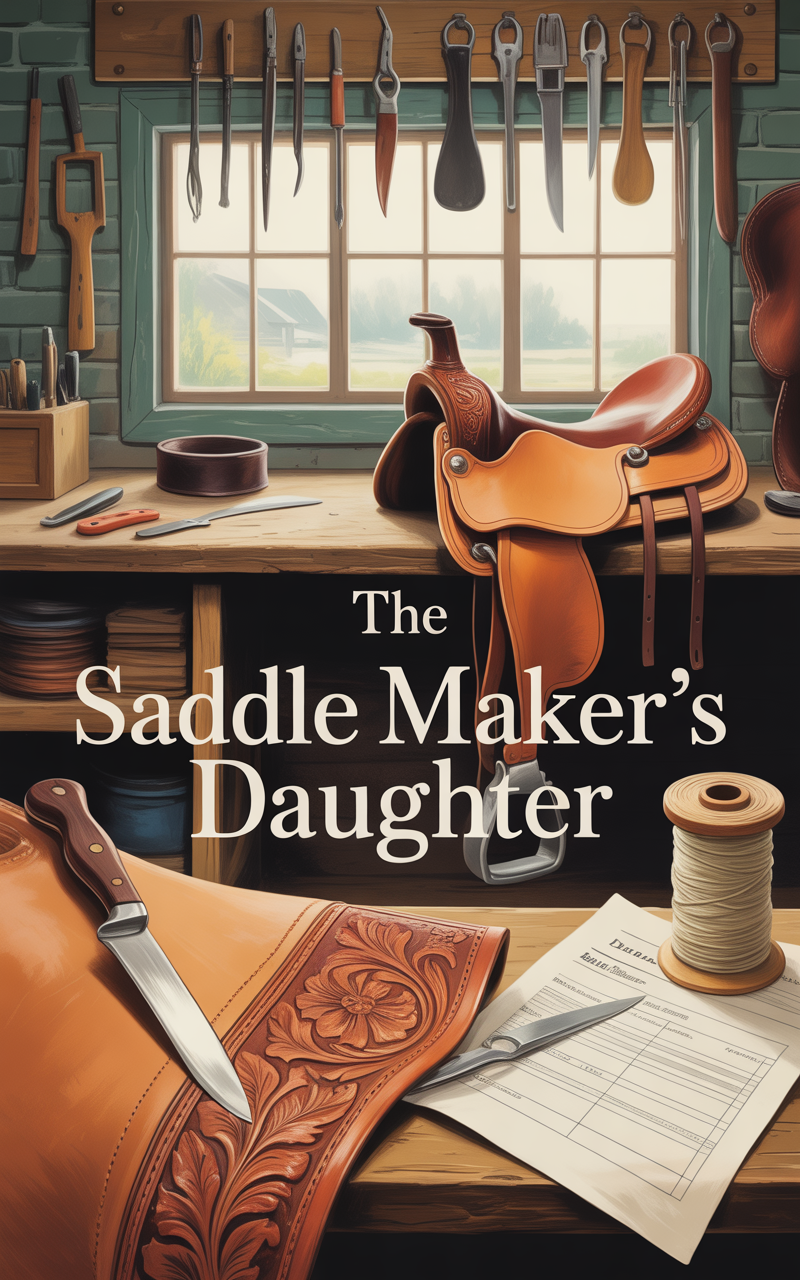
THE SADDLE MAKER’S DAUGHTER
Callista Ondine came back to Creston, Oregon because her father died and left her the saddle shop and she had sixty days to decide whether to save it or sell it honorably. She did not come back to deal with the Aurel family, who have been acquiring the main block’s commercial properties for three years. When Larken Aurel walks in on her third day with an offer in a folder, she is ready. She tells him specifically what is wrong with his numbers — the ventilation system her father installed in 2015, the workshop electrical infrastructure, the 1989 skylight that cannot be replicated in a 1920s building without significant cost. He takes notes. He says: you’re right. He comes back Thursday with revised numbers.
She finds something else wrong with those. He comes back again.
She had expected entitled and dismissive. He is specific, curious, and genuinely wrong about the value of the building in ways that suggest he hasn’t understood what the building is — not a commercial property but a craft facility, not four walls but a working system built over forty years by a man who knew what the work required. When she explains this, he asks the specific follow-up questions of someone who has been thinking about something rather than just reacting to it. When he watches her work — twenty minutes at the bench while she finishes a commissioned piece — he doesn’t say anything for the full twenty minutes and then says: I understand now what the building is for.
Neither of them is entirely talking about the building.
Larken has been executing his grandfather’s acquisition strategy for three years and has been quietly questioning it for two. The saddle shop is the first acquisition he can’t close because Callista keeps being right and because every time he comes back with better numbers she shows him something about the craft that changes what the numbers mean. He has been doing homework between visits. He is learning the word for the specific kind of value that isn’t on an assessment sheet.
She left Creston at twenty-two because she was afraid staying would mean becoming the version of herself her hometown expected. She came back at thirty and has been making the best work of her life. She is trying to figure out if that’s about the shop or about the decision to be there.
The offer on the counter is fair. The building should be hers. These are different sentences.
Tropes:
- Enemies-to-Lovers
- Small Business vs. Old Money
- Craft Heroine (Master Leatherworker)
- Ranch Heir Hero
- Slow Burn
- Oregon Small Town
Heat Level: Moderate
Why it sells:
- Craft heroine as rare and powerfully romanticized archetype — a master leatherworker at thirty who can explain exactly why the ventilation system matters is the kind of specific professional competence that romance readers respond to with intense loyalty; the saddle shop scenes are sensory and specific and readers will want to visit them
- Enemies-to-lovers with substantive opposition — the dispute is real and adult; she is right about the building, he is genuinely revising his position because she’s right, and his change of position costs him something real (a conversation with his grandfather, a resignation from three years of work); this is not enemies-to-lovers as misunderstanding, it’s enemies-to-lovers as genuine position change
- The craft as emotional language — vegetable-tanned leather, neatsfoot oil, beeswax, the swivel knife, the specific percussion of a stamp being set; these details appear in every shop scene and function as the book’s emotional register; readers who love specific sensory world-building will find and keep this book
- Oregon high desert setting as market differentiator — east of the Cascades, sagebrush and alkali, a ranch town distinct from the Texas Hill Country and Montana settings saturating the western romance market; this is a fresh visual and atmospheric palette
- Ferd’s one statement as slow-burn engine — “The shop is not a property. It’s a craft.” Said in chapter 11, reverberating for three chapters, acted on in chapter 18; the kind of single line that does structural work across multiple chapters is the mark of a plot that will generate reviews