
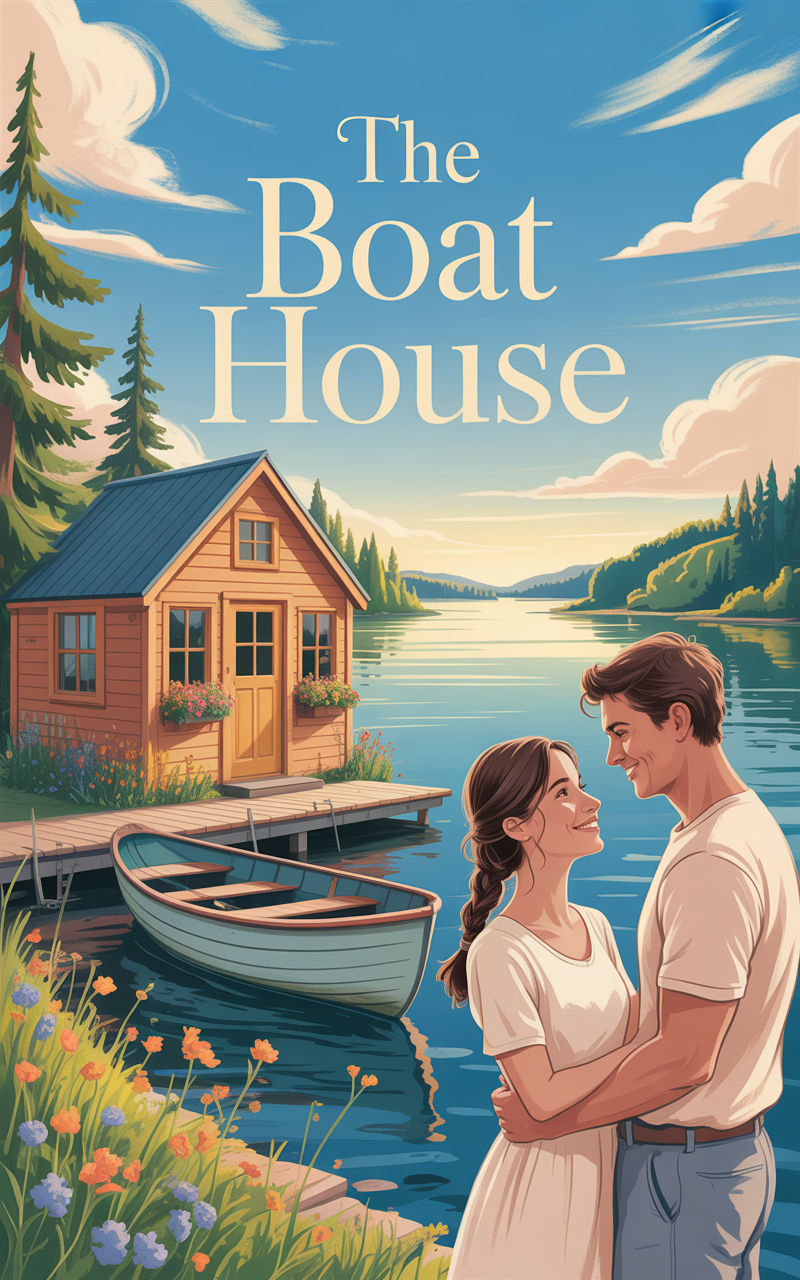
THE BOAT HOUSE
Sweet/Clean Small Town Romance
Wren Adler left Heron Lake at twenty-two with a research notebook and a lot of things she didn’t say. She built a career studying water — its chemistry, its slow decline, the quiet ways it signals distress — and got very good at professional distance. Returning on a research grant feels manageable. Finding out that the only boathouse with the water access she needs belongs to Garrett Hale — her best friend’s brother, the person she almost said something to the summer before she left, now a widower with a seven-year-old daughter who names fish — does not.
Garrett has been watching Heron Lake decline for eight years with nothing to do about it. Wren is something to do about it. He tells himself that’s why he says yes. He builds things with his hands for people he can’t say things to out loud, and there’s something covered with a tarp in Bay 2 of the boat works that he’s been telling her is a custom order.
The boathouse walls have waterline marks going back thirty years — a record of everything the lake has been. Wren has been reading things from careful distances for a decade. The problem is the data keeps getting harder to ignore.
The lake is struggling. So is the sentence she left unfinished. Some things take ten years to say.
Tropes:
- Second-chance romance
- Single dad
- Returning home
- Slow burn
- Landlord/tenant
- Animal Sidekick — N/A
- Slow-Burn Romance — one kiss at dawn on a lake that’s starting to come back, earned across six months of careful distance finally closing
Heat Level: Sweet/Clean
Why it sells:
- Second-chance romance is a perennially top-performing trope in sweet/clean, with K-Lytics showing a 1:2.4 sales-to-comp ratio and strong repeat-buyer behavior — the “almost” structure (connection never completed rather than relationship that broke) is fresher than the category’s dominant break-and-reunion format.
- The marine biologist / lake restoration premise is genuinely underrepresented — it gives the heroine real external stakes independent of the romance and a scientific voice distinct from any other package in this category.
- The skiff as the hero’s gesture targets the reader who wants to feel the declaration before it’s spoken — built for fans of slow burn who find grand gestures more satisfying when they’re made of craft and patience rather than drama.
- Second Chance secondary placement opens a lower-competition category with strong reader loyalty — ~11,500 competing titles versus 28,000 in the main small-town category, 1:2.4 sales-to-comp ratio.
- The northern Michigan lake setting carries strong summer promotional potential — and the environmental stakes (a lake worth saving) give this crossover appeal with readers who want emotional substance alongside the romance.