
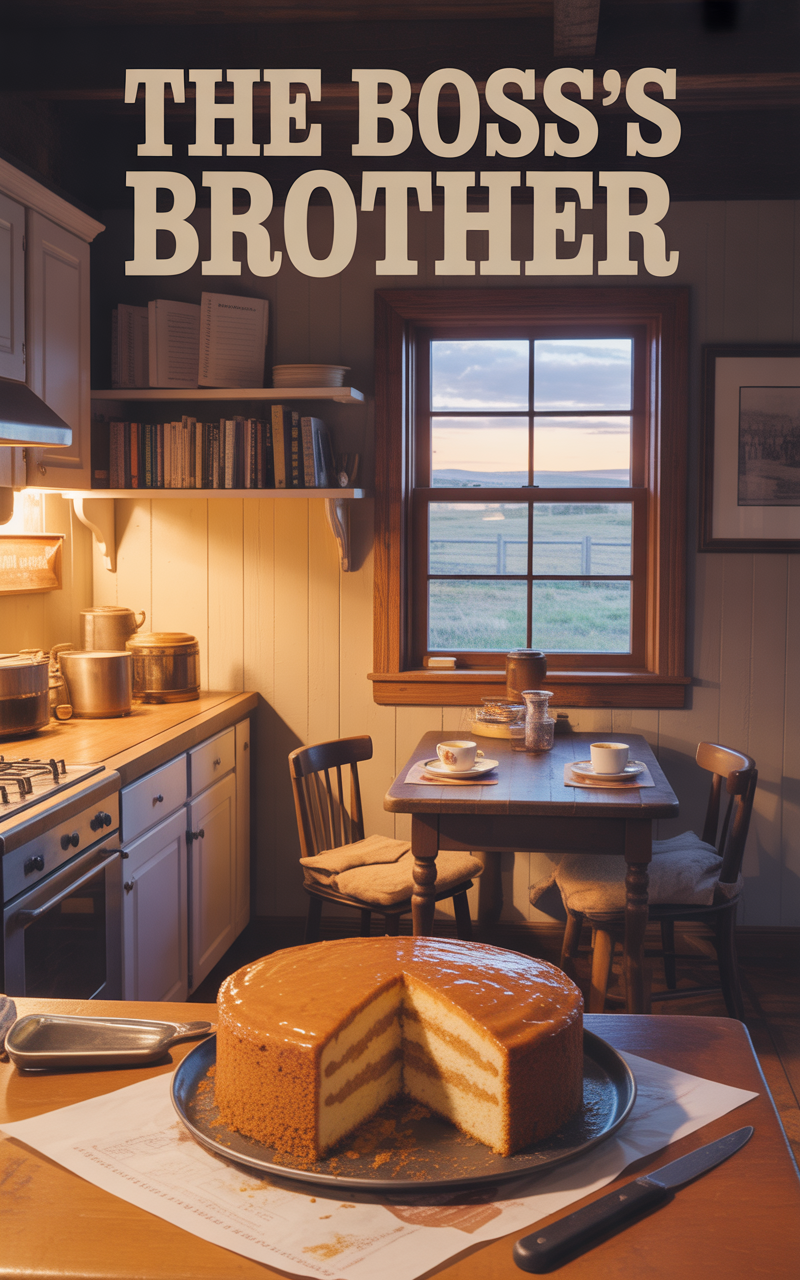
THE BOSS’S BROTHER
Greer Aldway has cooked for the Wrey Ranch for two years. She knows where everything is, what the crew needs before they ask, and how to manage a kitchen for fourteen people on any given day. She has been feeding people through difficulty since she was twelve years old and she does it with the specific competence of someone who learned early that the making and the cleaning were the things she could control. What she has not learned, in thirty-one years, is how to say what she wants for herself.
Dunstan Wrey comes back to Garnett County, Montana after eight months undercover for a federal operation that ended badly — not physically, just in the specific interior way of someone who has spent eight months being someone else so thoroughly that he came back not entirely sure which parts of himself were real. His brother Kielder has a ranch and a spare room. Dunstan shows up at the kitchen at 6 a.m. on his second morning and Greer gives him coffee because he is there and the coffee is made. He comes back the next morning. And the next.
The kitchen is Greer’s domain. The coffee is on at 5:45. The prep counter is clear. The recipe notebooks are on the shelf in order. The second chair at the east table has been empty for two years. Dunstan sits in it every morning for two months without being asked and does not require anything from the silence, and this is the most unusual thing anyone has done in her kitchen since she arrived.
He fixes the drawer she’s been working around for six months without mentioning it. He asks what she wants for breakfast — nobody has asked this, not in thirteen years. He comes to the kitchen because the kitchen is reliably real and he has been in situations where reliable and real were not the same thing, and the person in the kitchen is the reason the kitchen is what it is.
There is a federal assignment waiting. There is a honey cake she makes on her day off that she has never made for anyone else. There are things both of them need to say, and a kitchen where the coffee is always on, and a second chair that means something.
Tropes:
- Sheriff Hero
- Ranch Cook Heroine
- Botched Undercover Backstory
- Brother Adjacent
- Slow Burn
- Domestic Intimacy
Heat Level: Moderate
Why it sells:
- Ranch cook heroine as underused domestic archetype — the kitchen as power base inverts the typical western romance dynamic; she controls the space, he comes to her, and this is unusual and deeply satisfying for readers tired of heroines displaced into heroes’ worlds
- The second chair as silent through-line — an empty chair that acquires meaning over 21 chapters without ever being explicitly discussed is the kind of specific, sustained romantic object that readers mention in reviews as the thing that got them
- Sheriff hero with interior wound — the botched undercover operation is backstory, not thriller; the wound is about identity, which is more universal than physical danger and connects with a broader reader experience
- The honey cake as romantic turning point — she makes the thing she never makes for anyone else and gives him a piece without planning to; this is the moment the reader has been waiting for and it arrives without announcement; readers share scenes like this
- The I want this transformation — a heroine whose defining arc is learning to say what she wants out loud is both rare and powerfully resonant; when she says it in chapter 20, readers who have been waiting for it will feel it