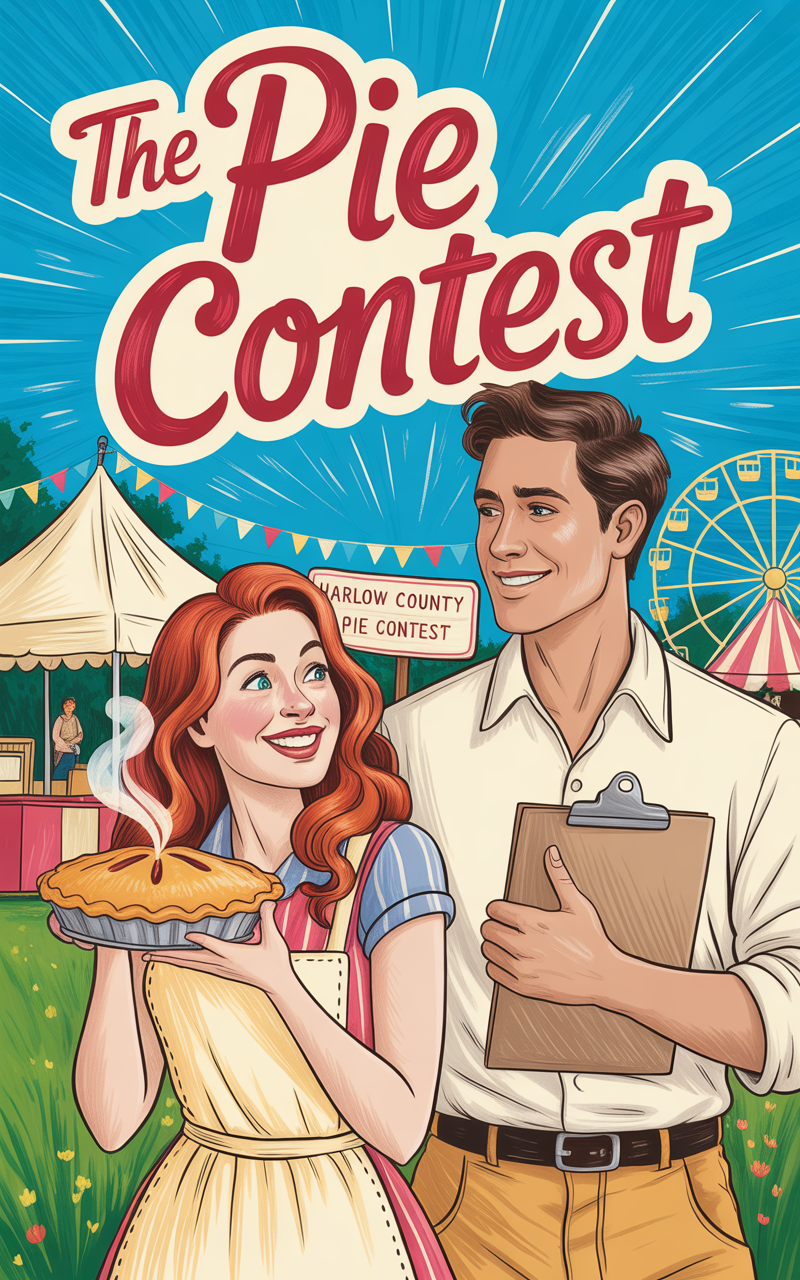
THE PIE CONTEST
Sweet/Clean Small Town Romance
Clementine Voss is a James Beard–nominated pastry chef on sabbatical with a plan: drive four hours to Harlow County, enter the pie contest, win convincingly in the category judged by her ex-fiancé’s new fiancée’s father, and feel better about everything. She is aware this is not her best idea. She commits anyway. The man at the registration desk — Asa Briggs, seven-year organizer of this event, reader of entry forms with a particular expression — Googles her name that evening, finds the James Beard nomination in thirty seconds, and decides not to disqualify her for reasons that start professional and get more complicated.
The plan proceeds. The pie is excellent. The judge’s scores are suspiciously low. And somewhere between a conflict of interest review, eleven minutes on the bleachers talking about the acid balance of sour cherries, and a man who knows everything about pie except how to make one, Clementine stops caring about winning and starts caring about something she didn’t drive four hours for. This is worse than the revenge plan, in the best possible way.
Some plans are bad. Some bad plans lead somewhere very good.
Tropes:
- Revenge plot turned love story
- Small-town competition
- Meet-cute
- Found family
- Fish out of water
- Animal Sidekick — N/A
- Slow-Burn Romance — one kiss in the contest tent in Chapter 21, witnessed by Dolores Fitch, three-time champion, who was absolutely watching
Heat Level: Sweet/Clean
Why it sells:
- Romantic comedy is the fastest-growing romance subcategory per K-Lytics Q1 data, with top-20 titles averaging 90–150 sales/day — a high-concept comedic premise converts on title and cover alone, with lower browse abandonment than dramatic entries.
- The revenge plot that becomes a love story is an underutilized structure in sweet/clean romance — it gives the first act unusually strong momentum and a clear comedic engine that distinguishes this from the category’s dominant slow-start formats.
- The pastry chef heroine is genuinely unlike any other in the category — her specific expertise drives plot, generates comedy, and gives the romance an unusual flavor metaphor system that makes the book immediately distinct on the shelf.
- Romantic Comedy secondary placement opens a high-performing category with strong impulse-buy behavior — K-Lytics shows ~14,000 competing titles with a 1:2.3 sales-to-comp ratio, and the crossover audience between romcom and small-town romance readers is large.
- The county fair setting has strong summer seasonal appeal — and the competition structure gives the story a natural escalating pace that keeps readers turning pages between romance beats.